Abu Dhabi Real Estate Market 2026: The Complete Investor Guide
Comprehensive analysis of Abu Dhabi's property market in 2026. Covers ADREC transaction data, price appreciation by area, rental yields, foreign investment flows, off-plan vs ready market dynamics, and strategic outlook for international investors.

Abu Dhabi's real estate market has entered a new structural phase. What began as a post-pandemic recovery in 2021 has matured into a sustained expansion underpinned by sovereign-backed economic diversification, population growth exceeding 4.1 million residents, and foreign direct investment at historically unprecedented levels.
The data is unambiguous. According to the Abu Dhabi Real Estate Centre (ADREC), the first half of 2026 recorded AED 117 billion in total transaction value — a 112 percent increase over H1 2025. The Emirates News Agency (WAM) confirmed that foreign direct investment into Abu Dhabi real estate reached AED 13.8 billion in H1 2026 alone, a 309 percent surge that already exceeded the total FDI for the entirety of 2025.
This guide analyses the key drivers, current valuations, risk factors, and strategic opportunities that international investors — whether from Europe, North America, or the broader MENA region — should evaluate before allocating capital to the Abu Dhabi property market.
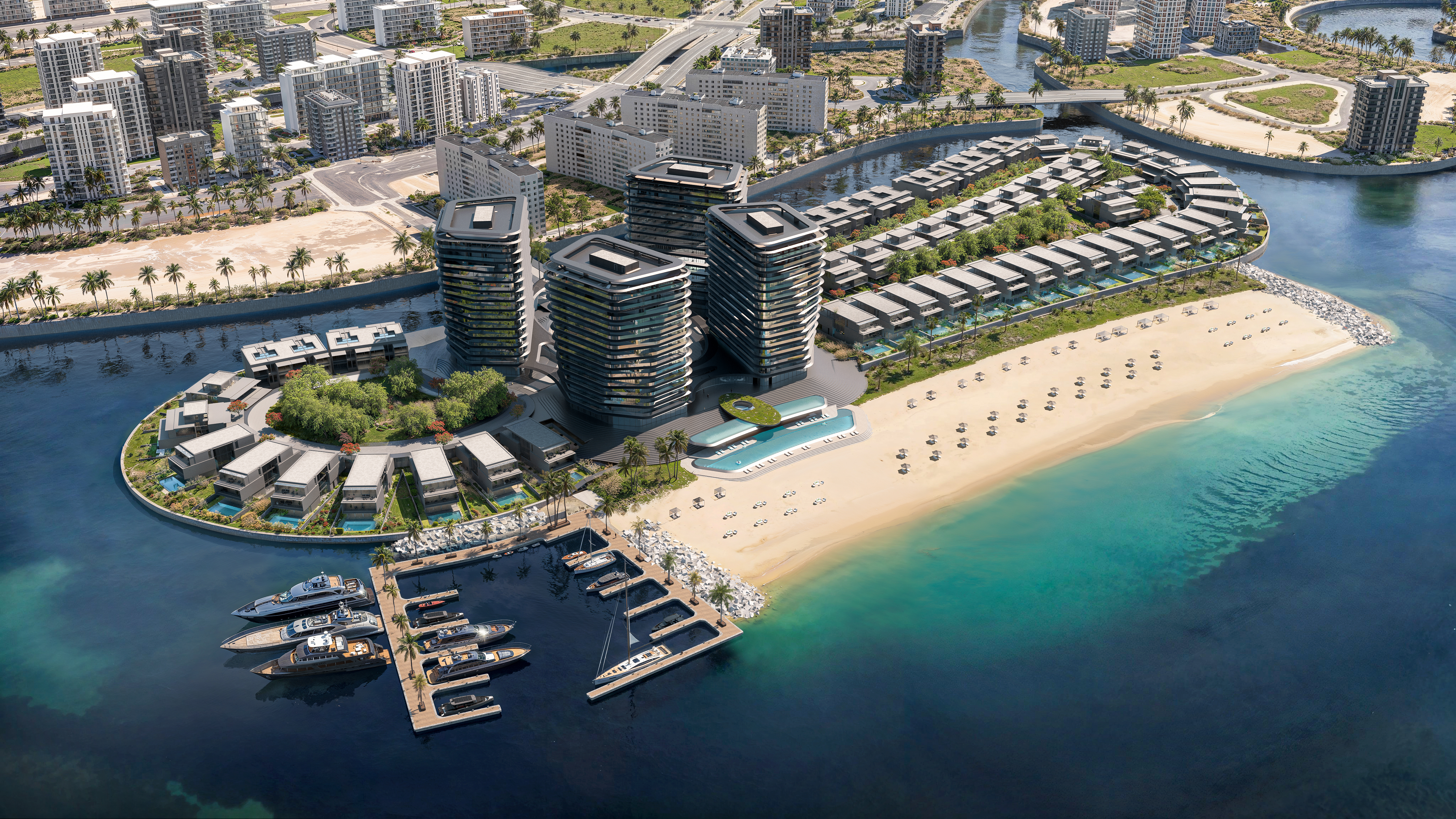
H1 2026 Market Performance: Record-Breaking by Every Metric
The first half of 2026 was the strongest period in Abu Dhabi's real estate history across all measurable categories:
| Metric | H1 2026 Value | Year-on-Year Change |
|---|---|---|
| Total transaction value | AED 117 billion | +112% vs H1 2025 |
| Residential sales value | AED 86.1 billion across 16,838 deals | +163.7% |
| Foreign direct investment | AED 13.8 billion | +309% (exceeded full-year 2025) |
| Off-plan share of sales value | 89% | Up from ~71% in 2025 |
| Resale price growth (apartments) | +20% | Year-on-year |
| Resale price growth (villas) | +12% | Year-on-year |
Source: ADREC, WAM, Abu Dhabi Media Office
The dominance of off-plan transactions — accounting for 89 percent of sales value and 82 percent of total volume — signals a market where investor confidence in future delivery is exceptionally high. This contrasts sharply with markets like Southern Europe, where off-plan sales remain a fraction of total activity due to weaker institutional trust frameworks.
The Five Structural Drivers Behind the Growth
Abu Dhabi's property price growth is not speculative. It is anchored in five quantifiable macroeconomic drivers:
1. Economic Diversification (Vision 2030)
The Abu Dhabi Economic Vision 2030 has successfully diversified the economy. Non-oil sectors now contribute approximately 55 percent of GDP, according to government statistics. This reduces the emirate's historical vulnerability to petroleum price cycles and creates sustainable demand for both commercial and residential property.
2. Population Growth
Abu Dhabi's population has surpassed 4.1 million and is projected to reach 4.5 million in the near term, with some forecasts targeting substantially higher figures by 2040. This growth is driven by the influx of global professionals attracted by zero income tax, the Golden Visa programme, and the expanding financial services sector centred on the Abu Dhabi Global Market (ADGM).
3. Infrastructure Investment
Major infrastructure projects are reshaping accessibility and value corridors. Etihad Rail will connect Abu Dhabi to Dubai in under one hour, effectively creating a "borderless" living concept where professionals can reside in Abu Dhabi while commuting to Dubai. Zayed International Airport is expanding from 45 million to 65 million passenger capacity by 2032. Etihad Airways operates over 300 daily flights and aims for 38 million annual passengers by 2030.
4. Regulatory Transparency
The Department of Municipalities and Transport (DMT) has established clear digital frameworks for property registration, title deed issuance, and dispute resolution. The DARI platform provides market intelligence based on verified transactional data. This level of institutional transparency is rare in emerging property markets.
5. Tax Architecture
The UAE levies zero personal income tax, zero capital gains tax on property, zero annual property tax, and zero inheritance tax. For European investors accustomed to combined tax burdens of 30 to 50 percent on rental income and capital gains, this represents a structural yield advantage that compounds significantly over medium-term hold periods.
Area-by-Area Price Benchmarks
Not all areas of Abu Dhabi perform equally. The following table provides current benchmark pricing for key investment zones:
| Investment Zone | Property Type | Price Range (AED/sqm) | Rental Yield | Investor Profile |
|---|---|---|---|---|
| Saadiyat Island | Ultra-luxury villas & apartments | 18,000 – 35,000 | 2.5 – 4.7% | Capital preservation, prestige |
| Yas Island | Mid-luxury apartments | 12,000 – 20,000 | 5.5 – 7% | Tourism-led rental income |
| Al Reem Island | Urban waterfront apartments | 10,000 – 16,000 | 5.7 – 7.8% | Consistent rental demand |
| Al Raha Beach | Premium waterfront | 13,000 – 22,000 | 6 – 7% | Balanced yield + appreciation |
| Masdar City | Sustainable mid-market | 8,000 – 13,000 | 6 – 8% | Entry-level investment |
| Al Reef | Affordable suburban | 6,000 – 9,000 | 8 – 10% | Maximum yield focus |
Source: ADREC market data, Savills, Cavendish Maxwell
Off-Plan vs Ready: Strategic Considerations
The Abu Dhabi market is increasingly bifurcated between off-plan and ready property, each serving distinct investment strategies:
Off-plan advantages: Lower entry pricing (typically 15 to 25 percent below comparable ready stock), flexible payment plans (commonly 30/70 or 20/80 structures), and the ability to capture capital appreciation during the construction phase. Abu Dhabi's regulatory framework, overseen by ADREC, requires developers to maintain escrow accounts, providing a layer of financial protection that is not universally available in other off-plan markets.
Ready property advantages: Immediate rental income, no construction risk, and the ability to physically inspect the unit before purchase. Ready properties also benefit from established service charge histories and verified building quality.
For most international investors, particularly those investing remotely from Europe or the Americas, off-plan in established freehold zones offers the strongest risk-adjusted returns — provided the developer has a verified track record of delivery.
Risk Assessment: What Could Go Wrong
Responsible analysis requires acknowledging risk:
Supply pipeline: Abu Dhabi has a significant volume of announced projects scheduled for delivery between 2027 and 2030. While demand fundamentals remain strong, localised oversupply in specific sub-markets is possible, particularly in areas without distinctive lifestyle positioning.
Market normalisation: Following the record-breaking first half of 2026, Savills and institutional analysts note a moderation in transaction velocity during Q2. This is widely characterised as normalisation rather than correction, but investors should calibrate expectations accordingly.
Currency risk: The AED is pegged to the USD at a fixed rate of 3.6725. This eliminates dollar-denominated currency risk but introduces exposure for EUR, GBP, and other non-dollar investors. A strengthening dollar effectively increases the cost of entry for European buyers.
Geopolitical factors: The broader Middle East geopolitical environment introduces headline risk, though Abu Dhabi specifically has maintained exceptional stability and was ranked the world's safest city by Numbeo for the tenth consecutive year in 2026.
Strategic Outlook: Where the Smart Money Is Going
The institutional consensus points toward continued strength in Abu Dhabi's property market, driven by structural demand factors rather than speculative momentum. Analysts at Abu Dhabi government economic data, Savills, and Cavendish Maxwell broadly agree on the following trajectory:
Residential prices are expected to continue rising at a moderated pace of 8 to 12 percent annually in premium zones through 2027. Off-plan properties in established communities with verified developers offer the most favourable entry points. Waterfront and island developments command structural premiums that are likely to widen as available beachfront land becomes increasingly scarce.
For international investors evaluating where to allocate capital within the global property landscape, Abu Dhabi offers a rare combination: sovereign-backed economic stability, zero taxation on personal property income, transparent regulatory frameworks, and gross yields that significantly exceed those available in comparable Mediterranean, European, or North American waterfront markets.
Your Island Awaits
Discover luxury waterfront residences on Abu Dhabi's most exclusive private island.
Explore Brabus Island